
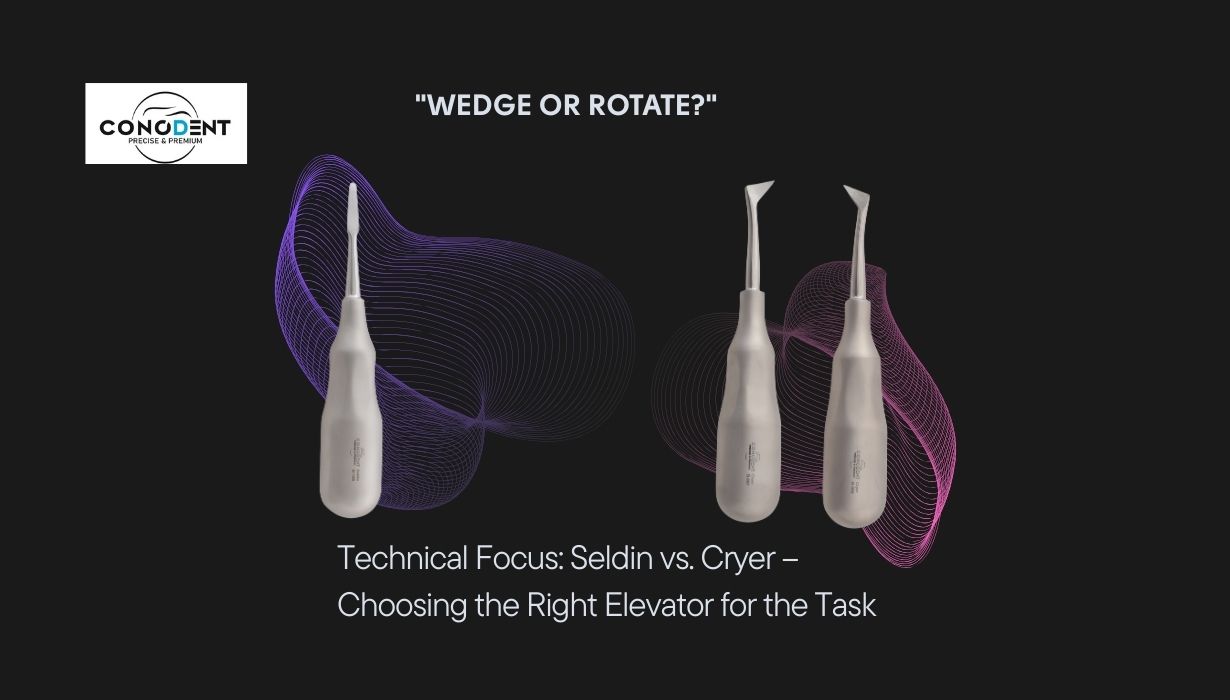
Technical Focus: Seldin vs. Cryer – Choosing the Right Elevator for the Task
Knowing when to use a Seldin vs. a Cryer can be the difference between a 5-minute extraction and a 30-minute struggle.
In the toolkit of a successful dental surgeon, the Seldin and Cryer elevators are two of the most frequently used instruments. While they may appear similar to the untrained eye, their mechanical principles and clinical applications are distinct.
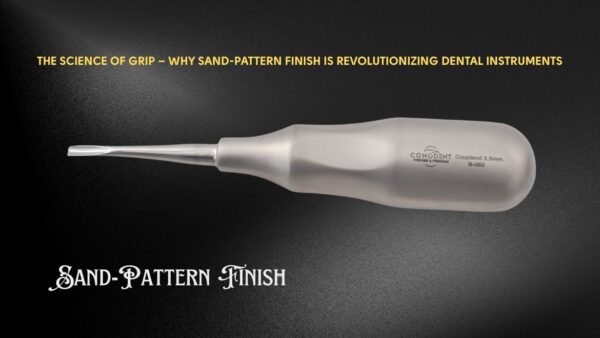
At CONODENT, we have enhanced both classic patterns with our signature Sand-Pattern Ergonomic Handles to ensure that no matter which you choose, you have the best grip in the industry.
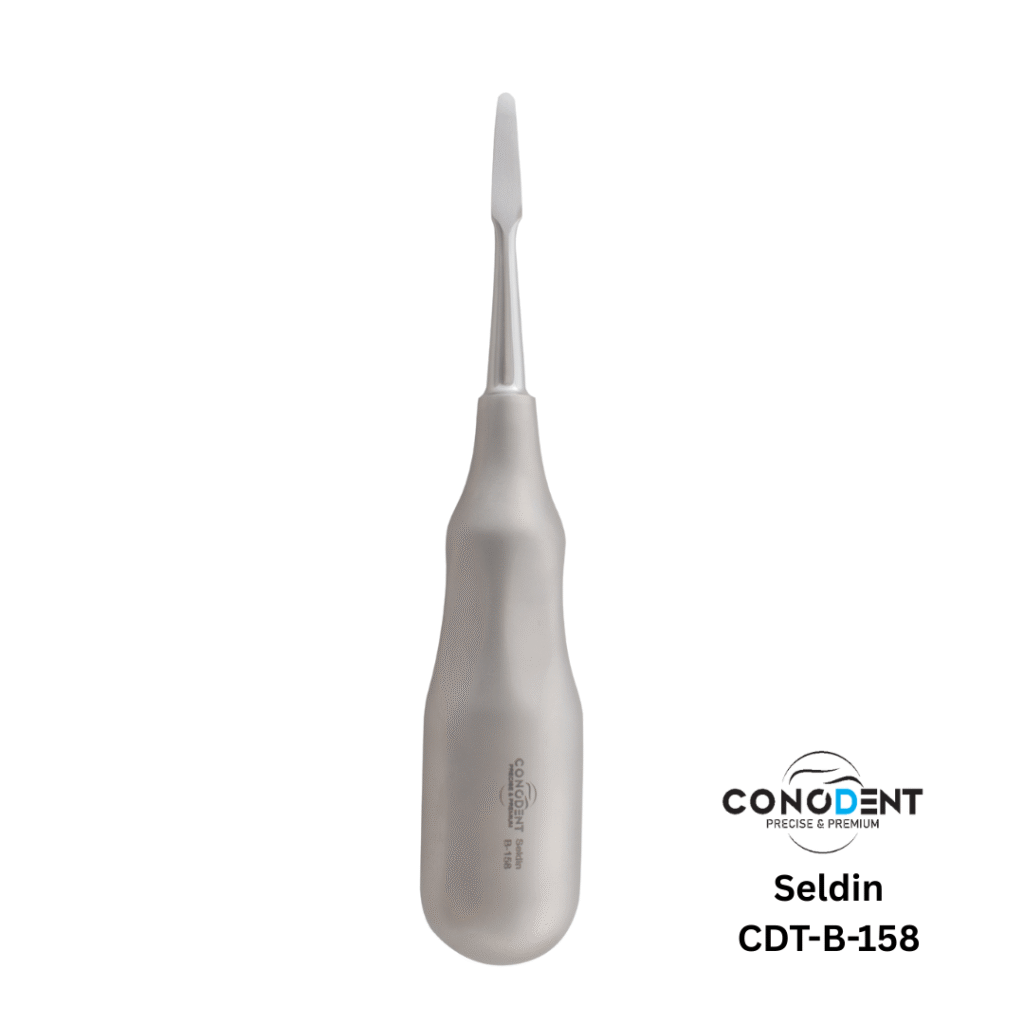
1. The Seldin Elevator: The “Universal” Wedge
The Seldin is primarily a wedge-style elevator. Its straight, thin, and slightly concave blade is designed to be driven vertically into the periodontal ligament (PDL) space.
- Mechanical Principle: Wedge and Lever.
- Best For: Initial luxation of a tooth, expanding the alveolar socket, and severing the PDL around the entire circumference of the root.
- When to reach for the CONODENT Seldin: When you need to create initial movement in a tooth that is still firmly seated.
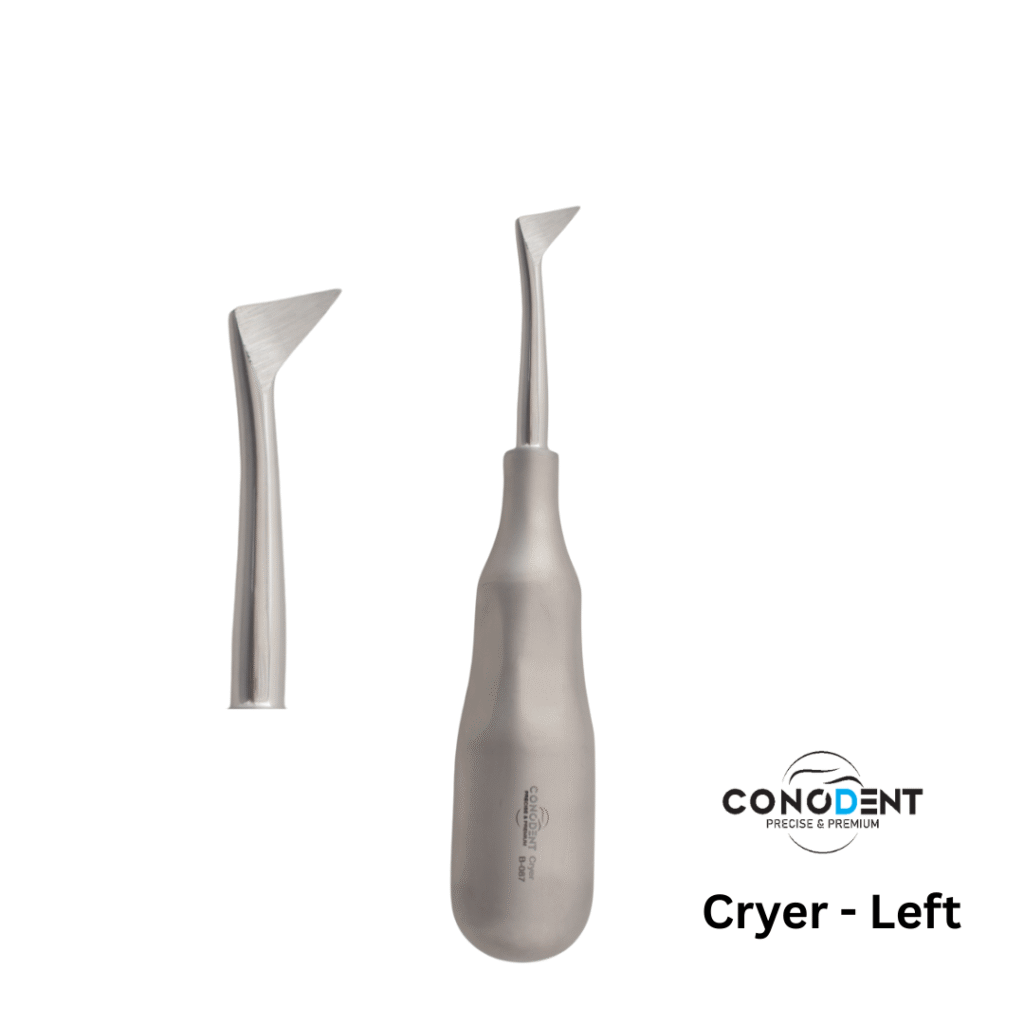
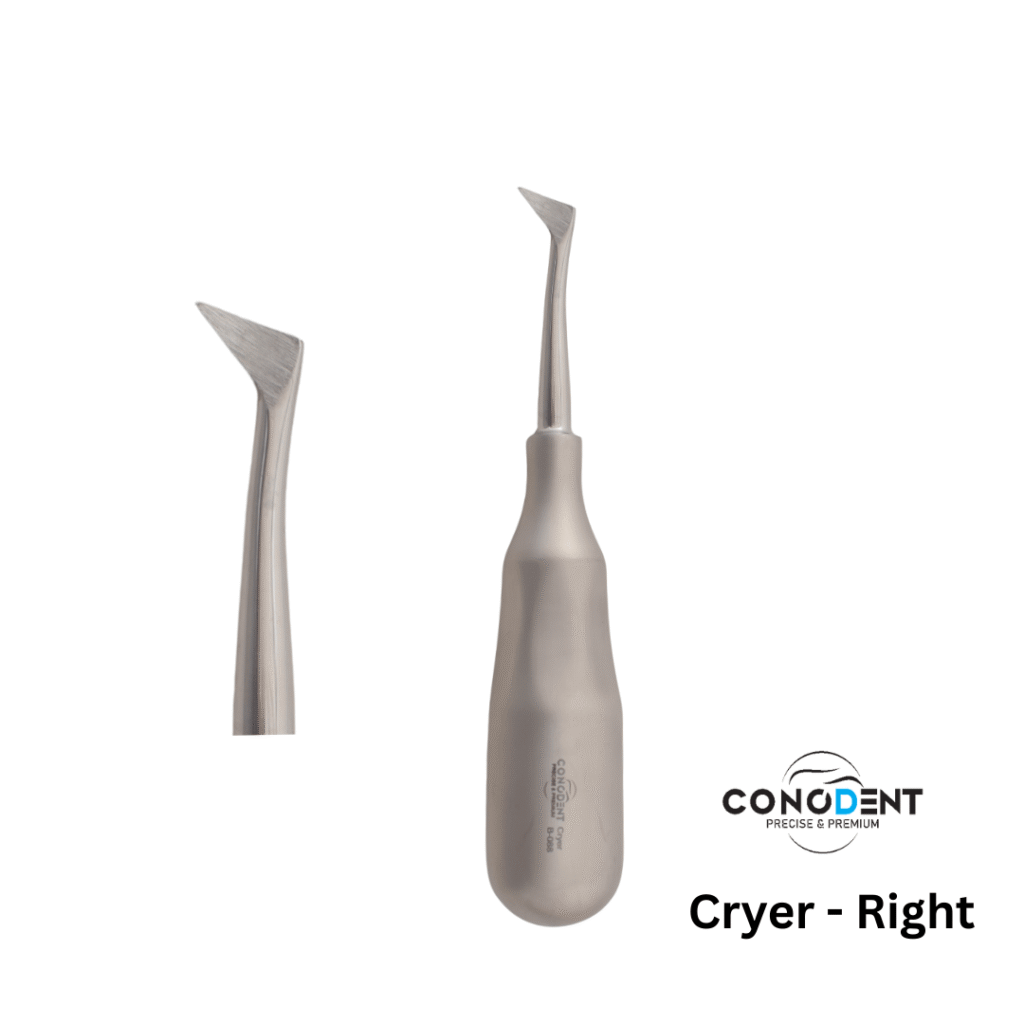
2. The Cryer Elevator: The “Triangular” Powerhouse
The Cryer is a wheel-and-axle elevator. It features a sharp, triangular-shaped blade that is angled off the shaft.
- Mechanical Principle: Wheel and Axle (Rotation).
- Best For: Removing fractured roots or roots left behind after a crown has been removed. It is particularly effective in multi-rooted mandibular molars once one root has been extracted.
- When to reach for the CONODENT Cryer: When you have an empty socket next to a remaining root. You place the tip into the empty socket, engage the interradicular bone, and rotate to “elevate” the remaining root fragment.
Key Comparison Table
| Feature | CONODENT Seldin | CONODENT Cryer |
| Blade Shape | Slim, Straight, Concave | Sharp, Triangular, Angled |
| Primary Motion | Vertical Wedging / Prying | Rotational (Wheel & Axle) |
| Ideal Arch | Universal (Upper & Lower) | Primarily Mandibular (Lower) |
| Best Use Case | Initial tooth luxation | Root fragment retrieval |
| Handle Finish | Sand-Pattern (Non-Slip) | Sand-Pattern (Non-Slip) |
The CONODENT Advantage
Regardless of the pattern, CONODENT elevators are manufactured in our ISO 13485:2016 certified facility using premium medical-grade steel. Our Sand-Pattern Finish ensures that even under high-torque rotational forces (Cryer) or heavy vertical pressure (Seldin), the instrument remains stable in your hand.
Hi, this is a comment.
To get started with moderating, editing, and deleting comments, please visit the Comments screen in the dashboard.
Commenter avatars come from Gravatar.