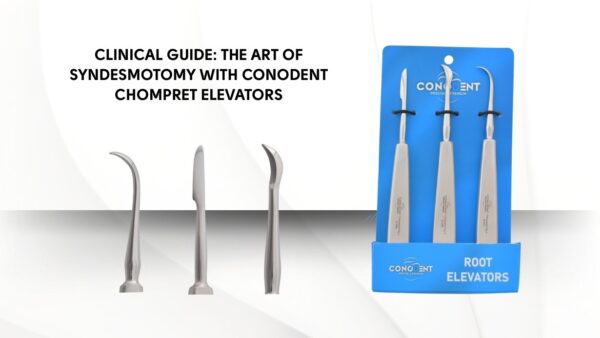
Clinical Guide: The Art of Syndesmotomy with Chompret Elevators
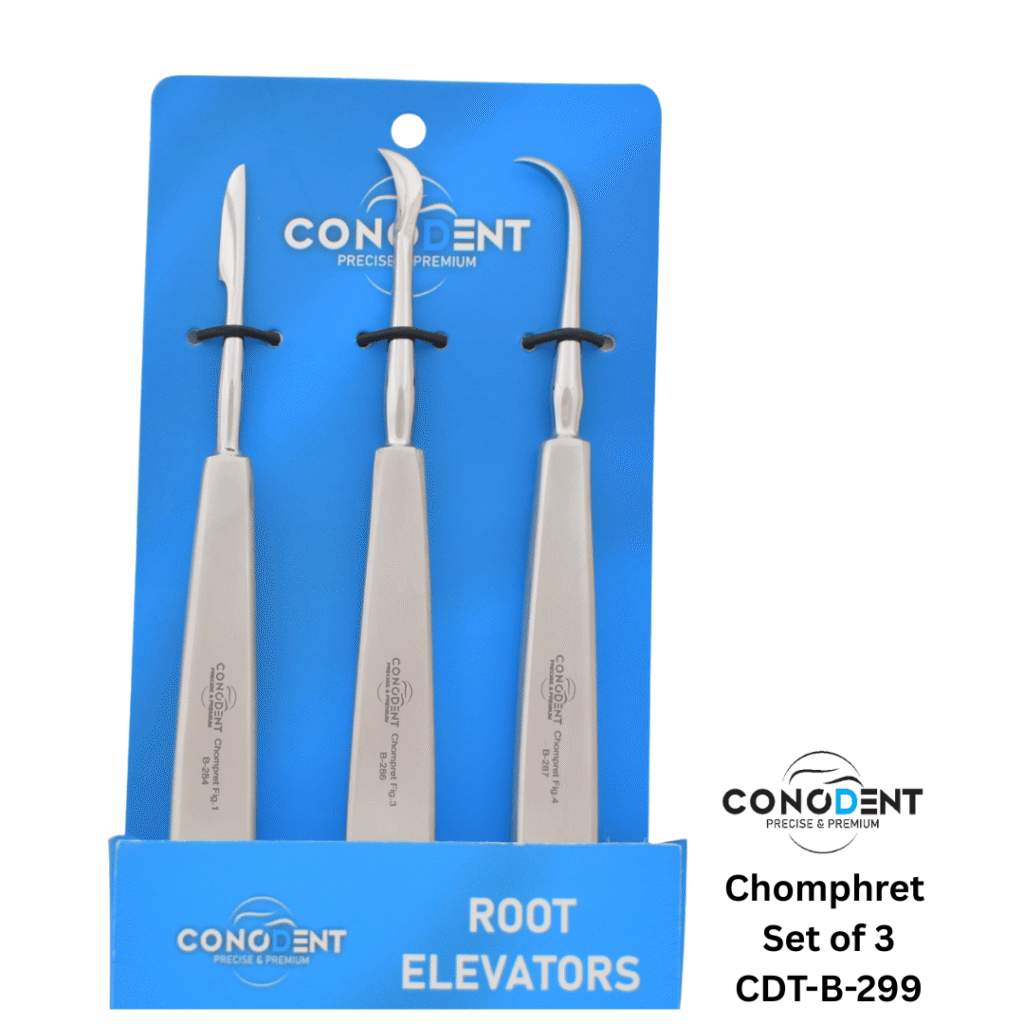
In modern exodontia, the goal is no longer just “getting the tooth out”—it is preserving the bone for the future. The Chompret Elevator is the essential bridge between the diagnosis and the final extraction.
Step 1: The Initial Entry (Syndesmotomy)
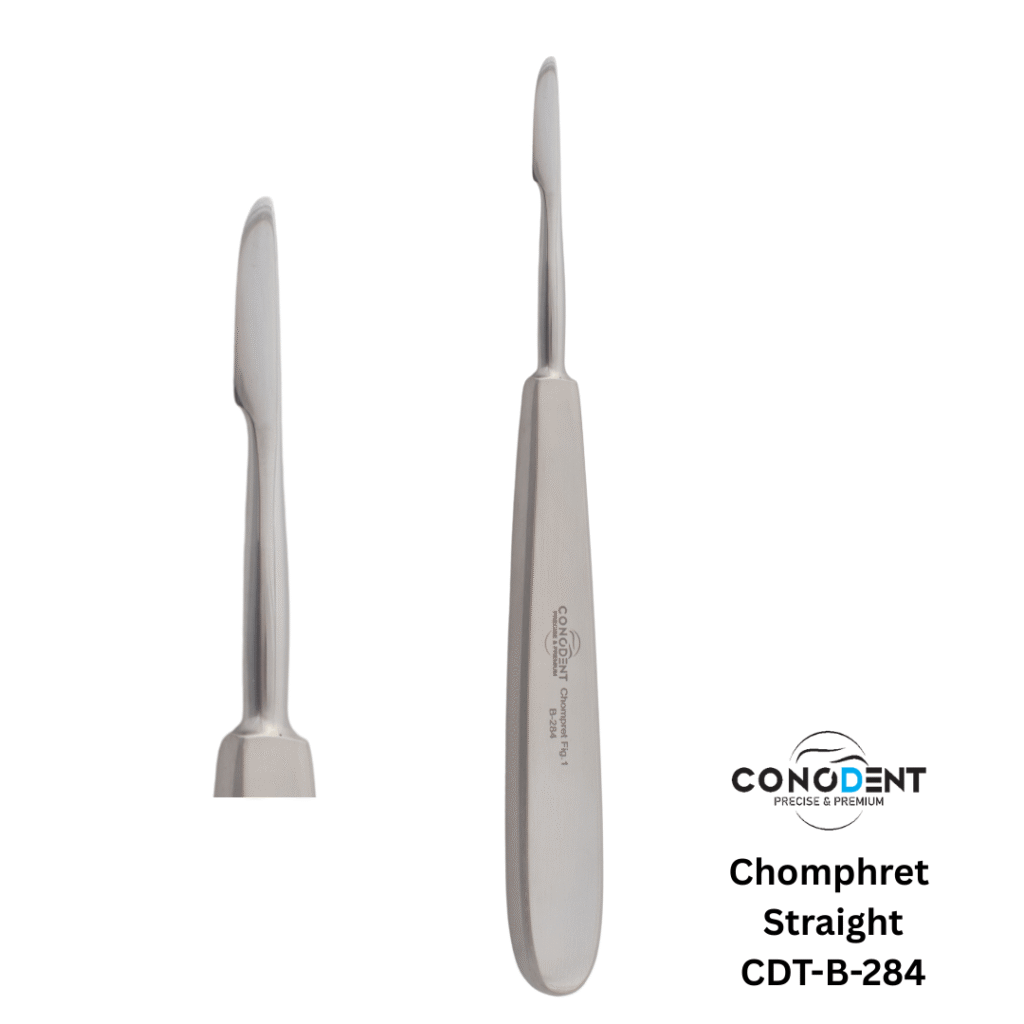
Before applying any lateral or rotational force with a large elevator or forcep, use the Straight Chompret to perform a 360-degree syndesmotomy.
- The Technique: Insert the ultra-slim tip into the gingival sulcus at a 10-degree angle to the root. Slide the blade down to sever the periodontal ligament (PDL) fibers.
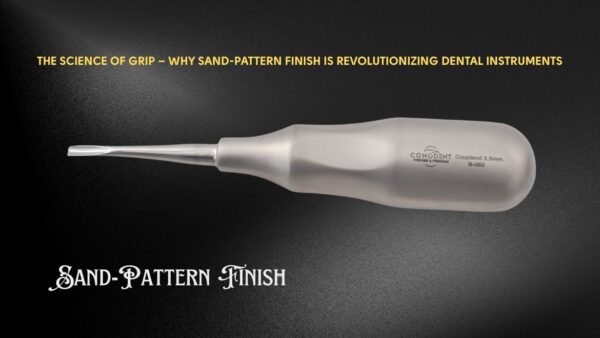
- The CONODENT Advantage: The Sand-Pattern handle allows for the extremely light “pencil grip” required for this delicate movement, providing maximum tactile feedback as you feel the ligament give way.
Step 2: Creating the Wedge Space
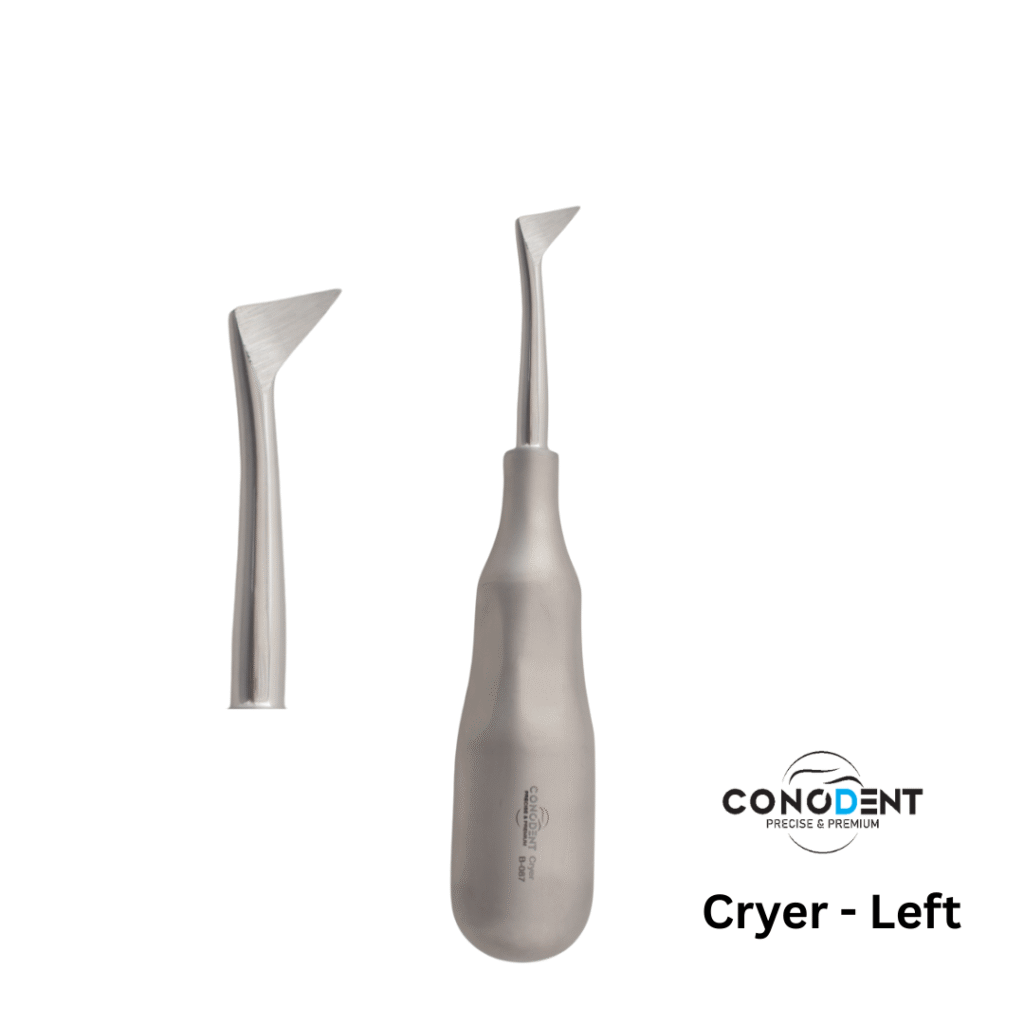
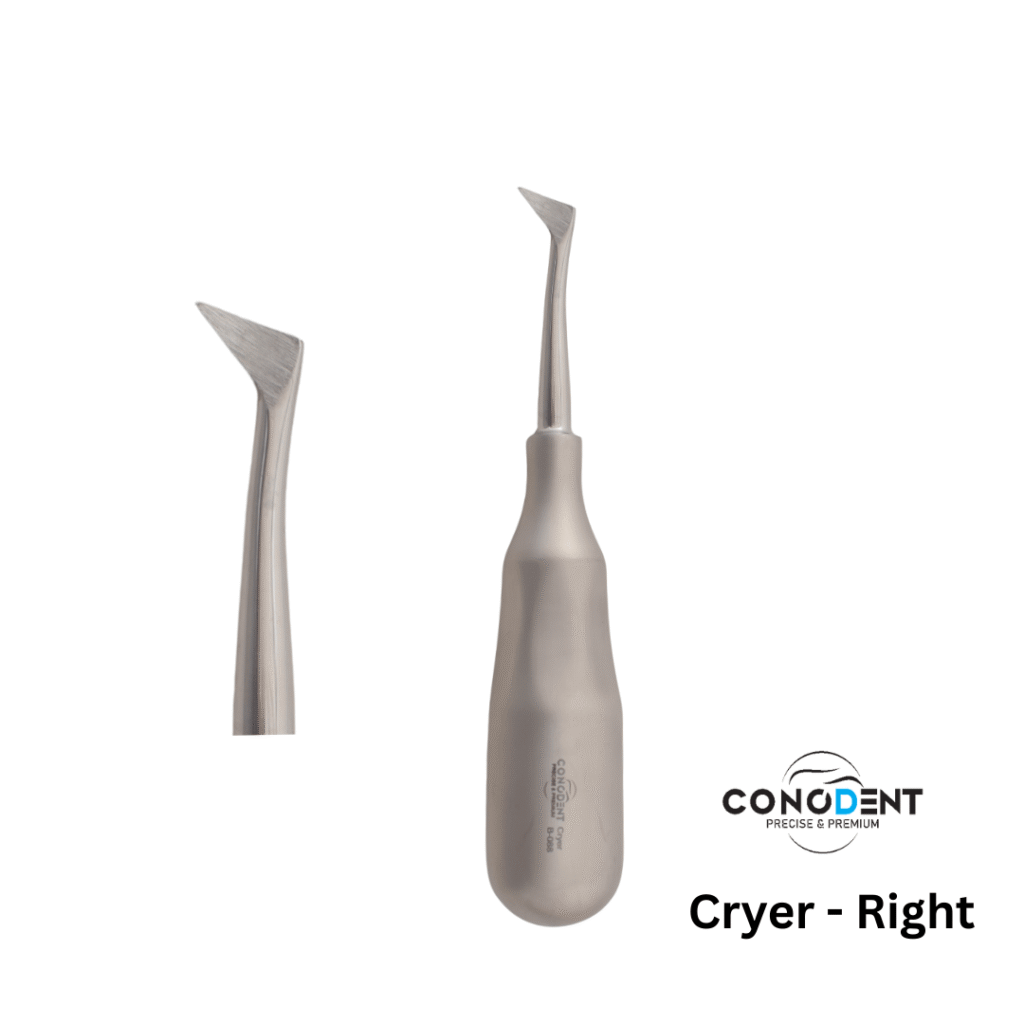
Once the fibers are severed, use the Left or Right Curved Chompret to create a small “pilot” space in the mesial or distal periodontal space.
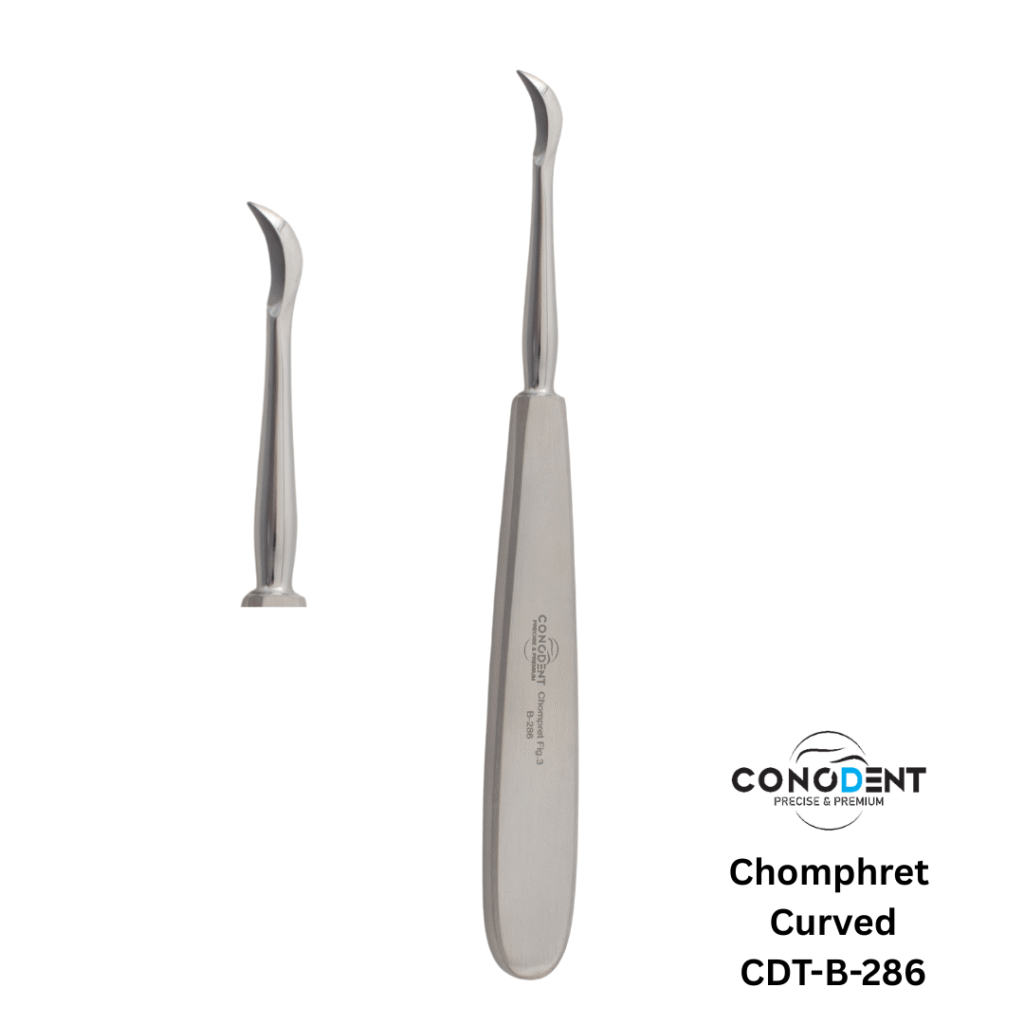
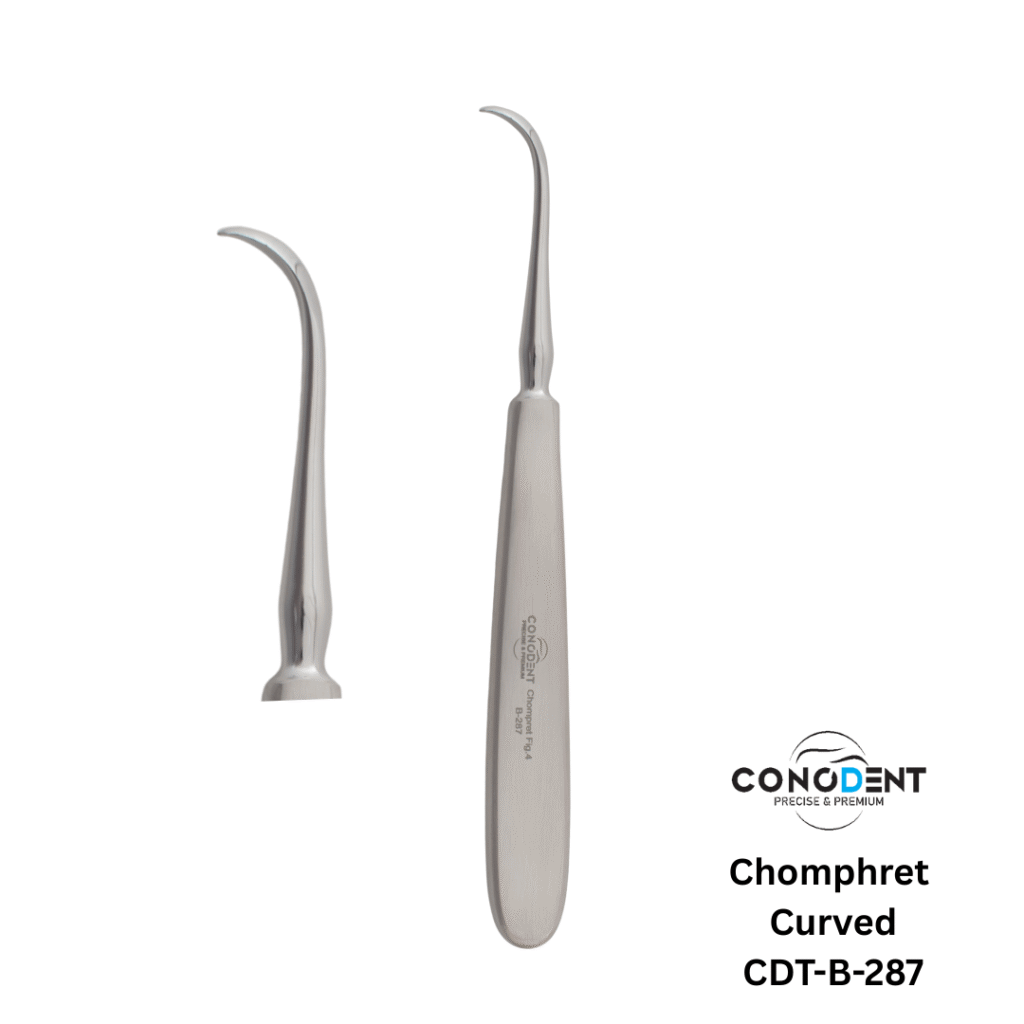
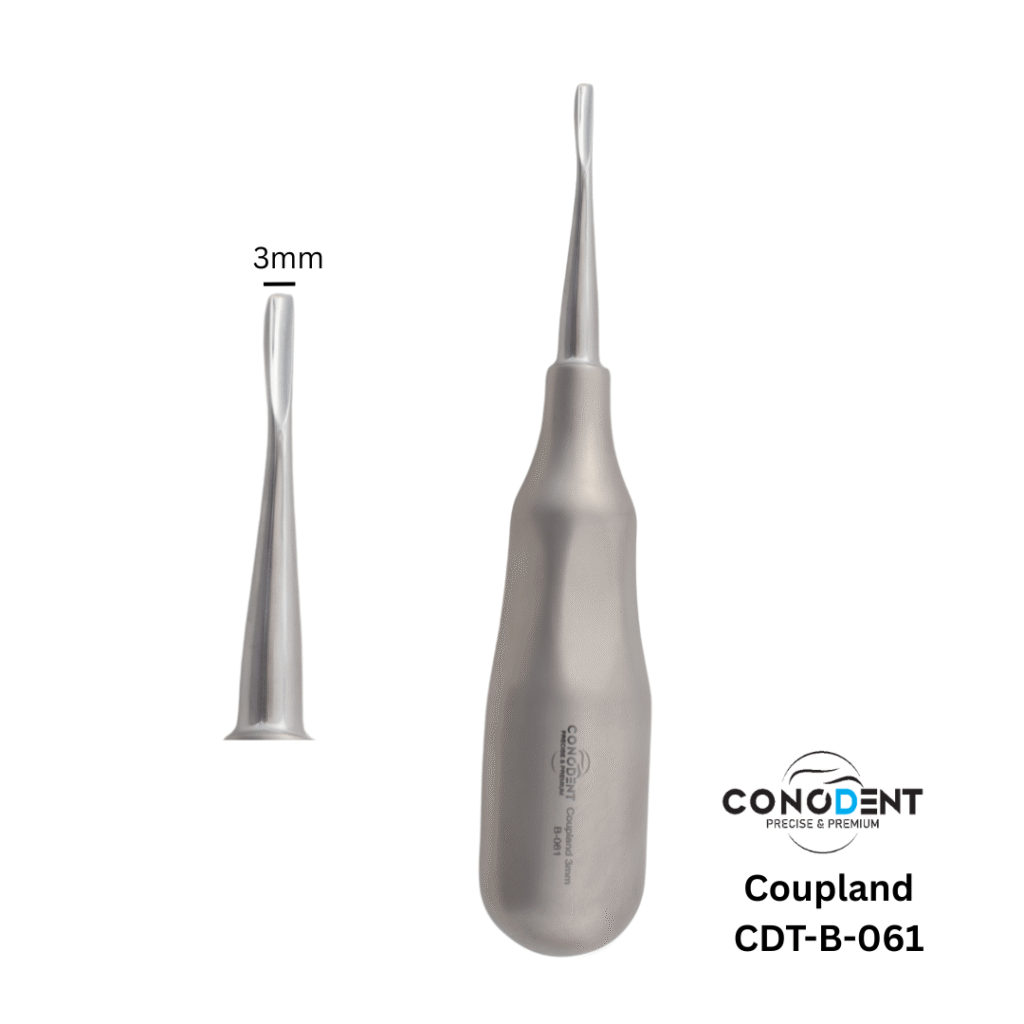
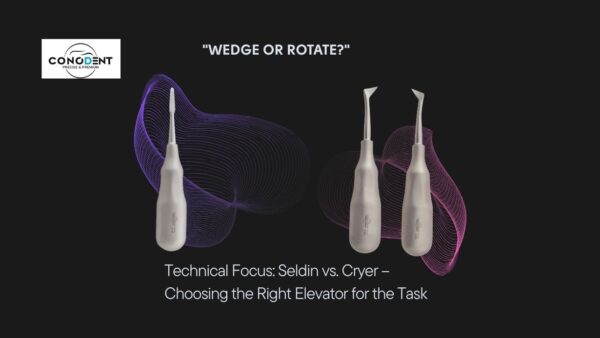
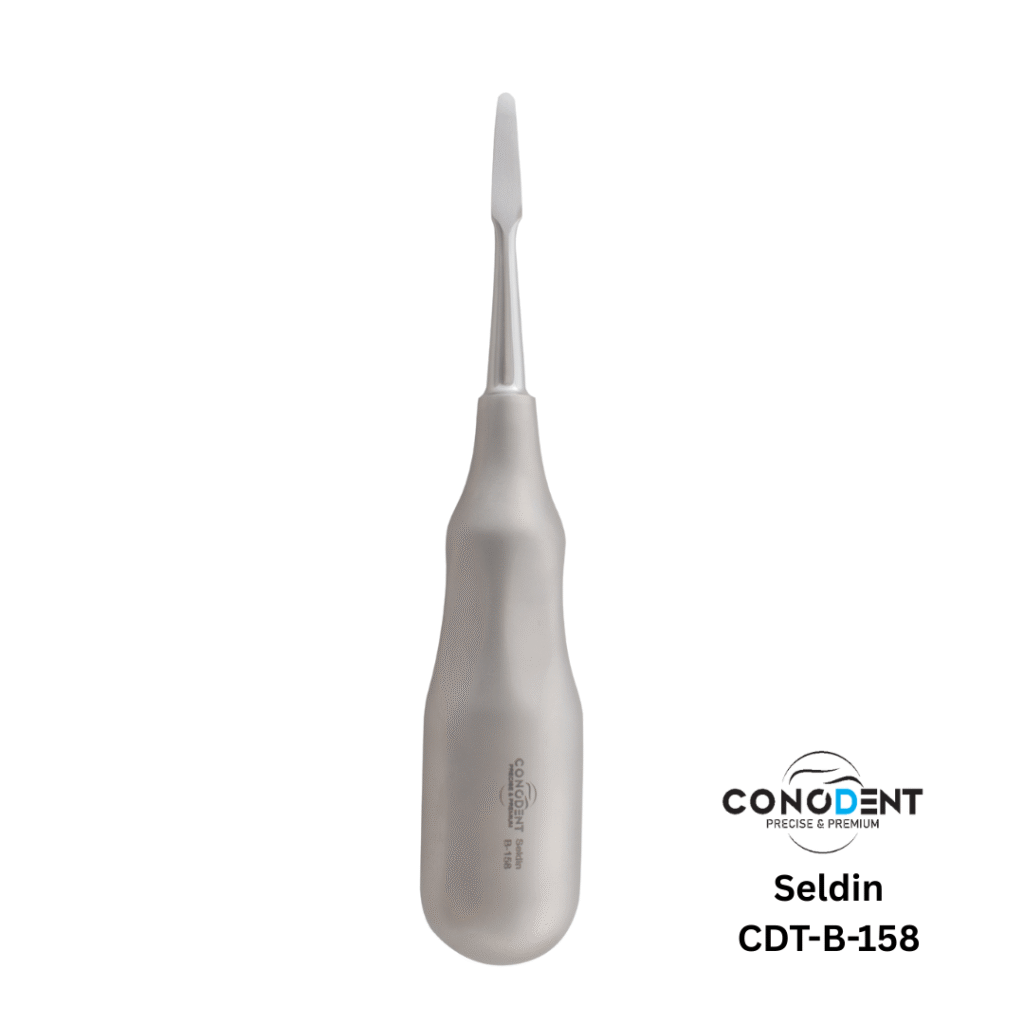
- The Technique: Use a gentle “teasing” motion. The goal is not to lift the tooth yet, but to create a path of least resistance for your larger elevators (like the Seldin or Coupland).
- The CONODENT Advantage: The curved geometry of the Chompret allows you to reach deep into the posterior regions without the handle hitting the opposing arch, maintaining a clear line of sight.
Step 3: Root Fragment Retrieval
If a root fractures subgingivally, the Chompret becomes your primary rescue tool.
- The Technique: Because the Chompret blade is thinner than a standard elevator, it can wedge between the root fragment and the alveolar wall without crushing the bone.
- The CONODENT Advantage: Our Premium Medical Grade Steel is tempered to be thin yet incredibly stiff, allowing you to apply the precise tip-pressure needed to “flick” a root fragment upward.
Why use a Chompret BEFORE Forceps?
| Benefit | How it works |
| Bone Preservation | Severing the PDL first prevents the “vulsion” of the buccal plate when the tooth is pulled. |
| Reduced Fracture Risk | By loosening the tooth first, you reduce the squeeze-pressure needed on the forceps, protecting the crown. |
| Implant Readiness | Maintains the “socket integrity,” which is vital for immediate implant placement success. |
| Patient Comfort | Less “cracking” sounds and less pressure felt by the patient during the procedure. |
This guide is designed to help your customers understand the clinical value of the Chompret Root Elevator (Syndesmotome) as a “pre-forceps” tool, emphasizing the atraumatic benefits of the CONODENT design.